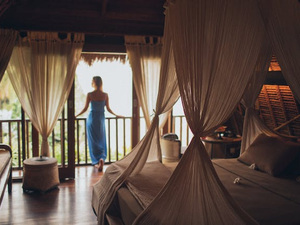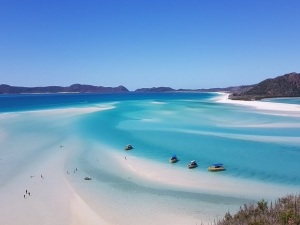
When I first started thinking about the Philippines, I pictured exactly what you would probably expect.
White beaches. Clear water. Palm trees. Cheap food. Maybe a few weeks moving between islands before heading somewhere else in Southeast Asia.
I had seen the photos of Palawan and Boracay enough times to know that the country was beautiful. What I didn't expect was that some of my favorite memories would have almost nothing to do with the places I had planned to see.
The Philippines is one of those countries where the people have a way of becoming part of the trip.
And sometimes, they completely change it.
Manila Wasn't What I Expected
I'll admit that Manila didn't make the best first impression.
After a long flight, I walked outside expecting that exciting feeling you get when you arrive somewhere new. Instead, I was greeted by heat, traffic and what seemed like a thousand cars trying to occupy the same piece of road.
My first journey through Manila took much longer than the distance on Google Maps suggested it should.
But after a couple of days, something changed.
I stopped trying to understand Manila as a tourist destination and started enjoying it as a city where millions of people actually live.
I ate things I couldn't pronounce. I discovered that convenience stores seem to be everywhere. I learned very quickly that crossing the road sometimes requires considerably more confidence than I possess.
And I started talking to people.
That turned out to be the best decision I made.
Filipinos are remarkably easy to talk to. Not everyone, obviously, but there is an openness that I noticed almost immediately.
Ask someone a simple question and there's a decent chance you'll end up having an actual conversation.
Where are you from?
How long are you staying?
Where are you going next?
Have you eaten?
That last question confused me at first.
I eventually learned that "Have you eaten?" or "Kumain ka na?" can be much more than a practical question about whether you're hungry. Food and caring for someone seem to be connected in Filipino culture in a way I hadn't really thought about before.
Meeting People Was Surprisingly Easy
Before the trip, I had wondered whether traveling alone would get lonely.
It didn't.
If anything, I had the opposite problem.
It became difficult to have a quiet day.
Between hostels, cafés, tours, people I met while traveling and friends of friends, there always seemed to be someone suggesting dinner, drinks or another place I absolutely had to visit.
The internet obviously changes this too.
Travelers today don't arrive in a country completely disconnected from everyone around them. There are travel communities, Facebook groups, Instagram, dating apps and platforms built specifically around meeting people.
The Philippines is no exception.
Some travelers are simply looking for friends or travel companions. Others arrive already talking to someone they hope to meet in person.
If dating is part of the reason you're visiting, there are also platforms specifically focused on meeting Filipina women, rather than relying entirely on the big international apps.
But I quickly realized that meeting someone is the easy part.
Understanding the culture around those interactions can be much more interesting.

Filipino Hospitality Can Catch You Off Guard
At some point during the trip, I stopped being surprised when casual plans became much bigger than expected.
You meet one person.
That person introduces you to another person.
Someone suggests food.
Then somebody's cousin appears.
Then another friend arrives.
Suddenly, the quiet dinner you thought you were having has become a table full of people.
There is something wonderfully chaotic about it.
I also noticed that Filipinos can ask questions that might feel surprisingly personal if you're coming from Europe or North America.
Are you married?
Do you have a girlfriend?
How old are you?
How much do things cost where you live?
Do you have children?
Sometimes these questions arrive approximately five minutes after meeting someone.
At first, I wasn't sure how to respond.
Eventually, I realized that most of the time there wasn't anything intrusive behind it. People were simply curious and trying to understand who I was.
I actually started enjoying the directness.
There are only so many conversations about the weather a person needs in one lifetime.
Getting Out of Manila Changed Everything
Manila grew on me, but leaving it showed me why people become obsessed with traveling around the Philippines.
The difficult part is choosing where to go.
There are more than 7,000 islands, and every Filipino you meet seems to have a different opinion about which one you absolutely cannot miss.
Cebu gives you a mixture of city life and easy access to beaches and surrounding islands.
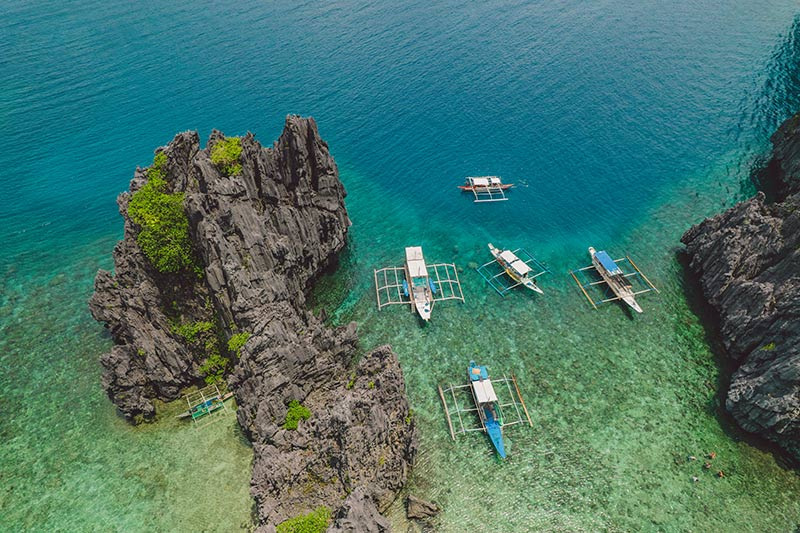
Palawan looks suspiciously similar to the heavily edited photos you see online, except it actually looks like that.
Davao has a completely different pace and personality from Manila.
Smaller islands can make you forget what day it is surprisingly quickly.
But traveling around the Philippines also teaches you patience.
Ferries don't always cooperate with your plans. Weather changes. Traffic happens. Domestic travel can take longer than expected.
If your itinerary has every hour carefully scheduled, the Philippines will probably teach you to stop doing that.
Some of my favorite days were the ones where very little went according to plan.
Food Became Part of the Experience
Filipino food doesn't seem to have the same international reputation as Thai or Vietnamese food.
I think that's unfortunate.
Adobo was the obvious starting point, but then came sisig, sinigang, pancit, lumpia and an increasing number of dishes that somebody insisted I needed to try.
Filipinos also have an impressive relationship with rice.
Breakfast? Rice.
Lunch? Rice.
Dinner? Obviously rice.
I wouldn't be surprised if there is a Filipino somewhere quietly considering whether rice would work as a dessert.
Actually, considering some Filipino desserts, it probably already does.
Then there's Jollibee.
Filipinos living overseas sometimes talk about Jollibee with the emotional intensity normally reserved for childhood memories.
I didn't understand it.
Then I went.
I'm still not completely sure I understand it, but I respect it now.
Family Matters More Than You Might Expect
One thing that became increasingly obvious was how important family is.
You see it everywhere, not just in dating or relationships.
People talk about parents, siblings, cousins, grandparents and extended family constantly. Decisions that might be considered entirely individual elsewhere can involve the whole family.
This is especially important if you're visiting the Philippines because of someone you've met online.
Meeting someone's family isn't necessarily a casual milestone.
If a Filipina invites you to meet her parents or brings you to a family gathering, understand that you may be entering a much bigger social world than just the relationship between the two of you.
And if you're expecting a quiet introduction to her parents, don't be shocked if cousins, aunts, children and several people whose exact relationship you never quite figure out are also there.
Trying to remember everyone's name is probably impossible.
Smile, be respectful and accept the food.
You'll survive.
Not Every Interaction Is About Money
Before visiting the Philippines, I had read plenty of warnings online.
Scams.
Tourist prices.
Dating scams.
People asking foreigners for money.
Some of those warnings are legitimate. Anyone traveling should use common sense, particularly when meeting someone from the internet.
Don't send money to someone you've never met.
Meet new people in public.
Keep control of your accommodation and travel arrangements.
Don't become financially involved with someone immediately.
These aren't really Philippines-specific rules. They're good rules almost anywhere.
But I also think it's possible to become so suspicious that you ruin your own trip.
Most people I encountered weren't trying to get anything from me.
They were just people.
Some were curious about where I came from. Some wanted to practice English. Some wanted to tell me where I should travel next. Some wanted to share food.
Being cautious is sensible.
Treating every friendly person as a potential scammer isn't.
Finding that balance is probably one of the most useful skills you can bring when traveling anywhere unfamiliar.
English Makes Traveling Much Easier
Another thing I underestimated was how easy communication would be.
English is widely spoken in the Philippines, particularly in cities and tourist areas.
That changes the travel experience considerably.
You can ask questions, joke with people and have conversations that go far beyond ordering food or asking for directions.
Of course, learning a few Filipino words makes things more fun.
Salamat, thank you, became automatic fairly quickly.
Ingat, take care.
Masarap, delicious.
And if you spend enough time around Filipinos, you'll inevitably start hearing expressions that don't translate perfectly into English.
Language is one of those little things that turns somewhere from a destination into a place you begin to understand.
The Philippines Is Better When You Don't Rush It
The biggest mistake I nearly made was trying to see too much.
When you look at a map, it's tempting to build an itinerary with Manila, Palawan, Cebu, Bohol, Boracay and several other islands squeezed into two or three weeks.
Technically, you can.
I'm not convinced you should.
The Philippines isn't a country that rewards rushing.
Flights and ferries consume time. Weather changes plans. And some places become much more enjoyable once you've stayed long enough to recognize the person at the café or know where to eat without checking Google.
Slowing down also gives you more opportunities to actually meet people.
That became more valuable to me than ticking another island off a list.
I Would Go Back for Different Reasons
If you'd asked me before the trip why I wanted to visit the Philippines, I would have said the beaches.
And the beaches absolutely delivered.
Some of them are ridiculous.
There were moments when I looked around and thought the place couldn't possibly look as good in a photograph as it did in front of me.
But those aren't necessarily the memories that stayed with me most.
I remember conversations.
Meals that lasted much longer than planned.
Being invited somewhere unexpectedly.
Laughing because I had misunderstood something.
People insisting I eat more when I was already completely full.
The feeling of gradually becoming more comfortable in a country that had initially seemed overwhelming.
That's what surprised me about the Philippines.
You can arrive with a carefully planned list of places you want to see.
But the country has a habit of introducing you to people you didn't plan to meet.
And sometimes those people become the best part of the trip.